Curve Finance walkthrough
A practical Curve Finance guide
Everything a first-time user needs to swap, provide liquidity and earn on Curve Finance without stepping on the common mistakes — written for people who have never touched a Curve Finance pool before.
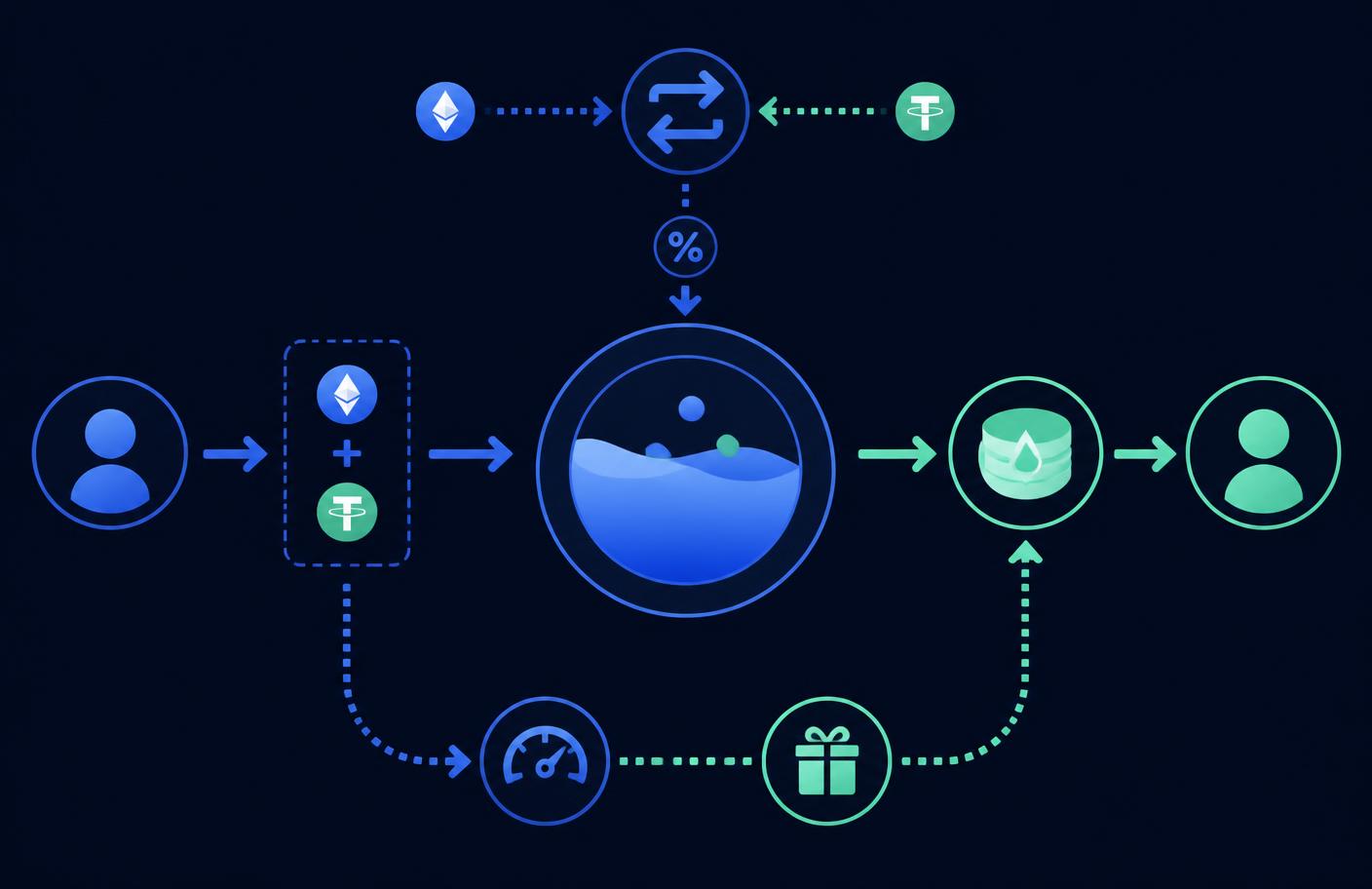
Five steps to using Curve Finance
- 01
Prepare a self-custody wallet
Curve Finance never takes custody. Fund a wallet on the chain you plan to use, keep some native gas token aside, and always reach Curve Finance through a bookmark rather than a search advert.
- 02
Pick the right Curve Finance pool
Check the pool's assets, its current balance between them and its amplification setting. A well-balanced Curve Finance pool quotes better prices; a badly skewed one is signalling stress in one of its assets.
- 03
Swap or deposit
For a swap, review the expected output and set a sane slippage tolerance. For liquidity, note that depositing the token a Curve Finance pool is short of can earn a small bonus, while adding the token it already holds too much of incurs a penalty.
- 04
Stake LP tokens in a gauge
Holding Curve Finance LP tokens earns swap fees only. Staking them in the matching gauge adds CRV emissions, and any veCRV you hold boosts that rate on your own position.
- 05
Monitor and exit deliberately
Revisit your Curve Finance position when market conditions change. If one asset in the pool starts drifting from its peg, understand that the Curve Finance curve will leave you holding more of the weaker asset.
Understanding what you actually own
When you deposit into Curve Finance you stop owning a specific token and start owning a share of a pool. If a Curve Finance pool holds three stablecoins and one of them weakens, arbitrageurs will sell you that weak asset and take the strong ones. Your share is still the same percentage, but its composition has shifted. This is not a bug in Curve Finance; it is how any AMM absorbs an imbalance, and it is exactly why choosing which Curve Finance pool to enter matters more than chasing the highest advertised yield.
Reading a Curve Finance yield figure honestly
A Curve Finance pool page usually shows a base fee APY plus a rewards range. The base number comes from real trading volume and is the most durable part. The rewards range reflects CRV emissions and assumes a boost you may not have; without veCRV you should expect the bottom of the range. Any additional incentive from a partner protocol is typically the least reliable component of a Curve Finance return, because it can end at any time.
Gas, chains and trade sizing
Curve Finance is deployed on many networks. On Ethereum mainnet the execution quality is best but each transaction costs more, so small positions can spend their first months of yield on approvals, deposits and claims. On layer twos the same Curve Finance actions cost cents, at the price of somewhat shallower pools. Size the trade to the venue: for large stable swaps mainnet Curve Finance depth usually wins, for routine amounts a layer-two Curve Finance deployment is the sensible default.
Safety habits worth building
- Bookmark the real Curve Finance interface and never click sponsored results.
- Verify the pool contract address before your first deposit.
- Grant limited token approvals and revoke ones you no longer use.
- Treat any Curve Finance yield that looks far above the rest of the market as a signal to investigate the underlying asset, not as free money.
- Start with a small position until the whole Curve Finance flow feels familiar.
Curve Finance beginner questions
Do I need CRV to use Curve Finance?
No. Anyone can swap or provide liquidity on Curve Finance without holding CRV. CRV only matters if you want governance power or boosted emissions.
Can I lose money providing liquidity on Curve Finance?
Yes. Curve Finance stable pools have minimal divergence loss while pegs hold, but a depeg, a contract exploit or an underlying asset failure can all cause losses.
How often should I claim Curve Finance rewards?
Claiming costs gas, so on expensive chains most Curve Finance users claim infrequently and let rewards accumulate rather than harvesting daily.