Lowest slippage in DeFi
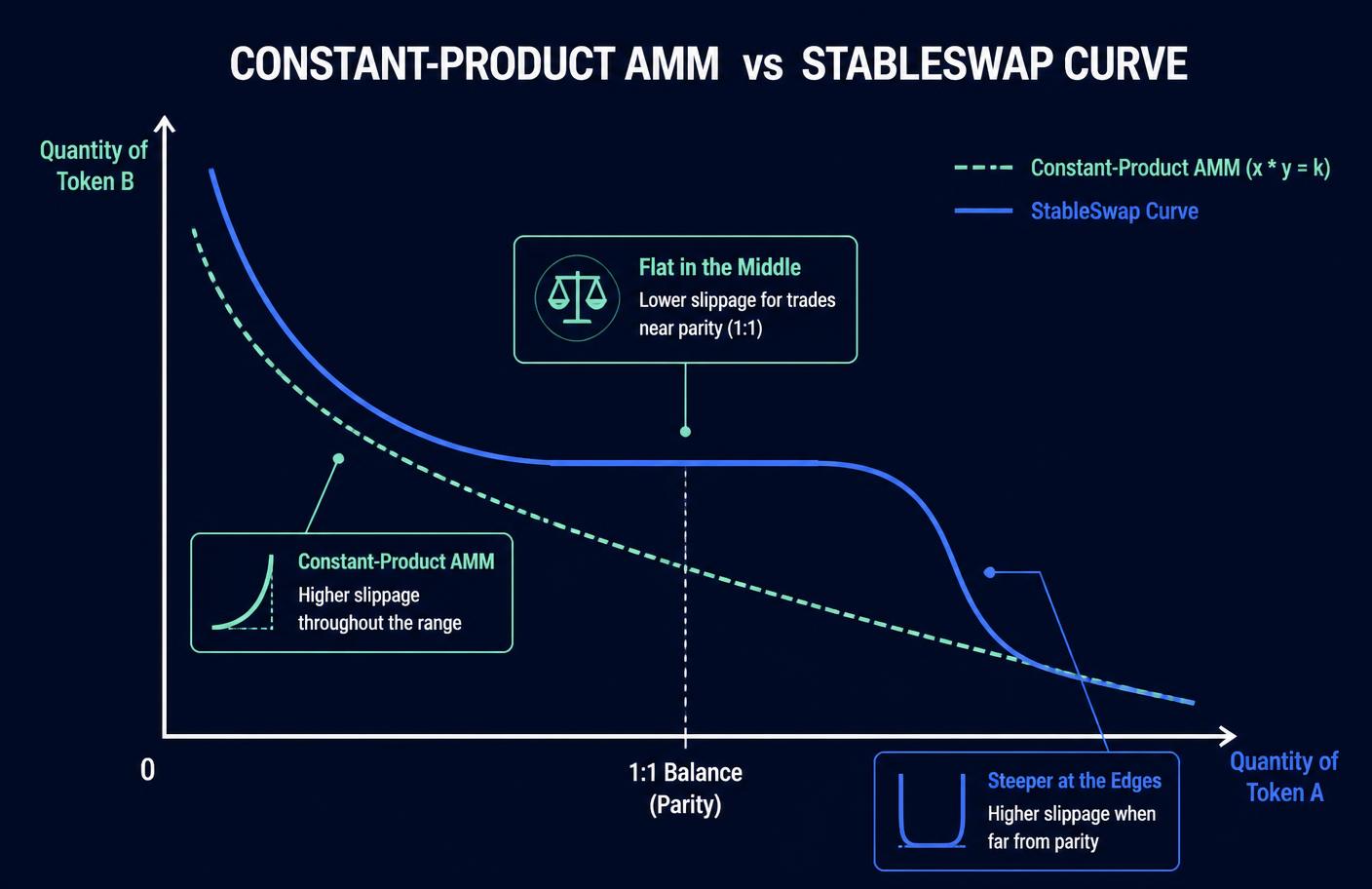
The Curve Finance StableSwap invariant flattens the bonding curve near parity, so a multi-million-dollar USDC to USDT swap on Curve Finance can settle with a fraction of the price impact a constant-product DEX would charge.
Curve Finance knowledge hub
Curve Finance is the decentralized exchange that made low-slippage stablecoin trading possible. This Curve Finance hub explains the Curve Finance StableSwap maths, Curve Finance liquidity pools, CRV and veCRV tokenomics, Curve Finance security practices and how Curve Finance compares with every other DeFi exchange — in plain English, with infographics.

The Curve Finance StableSwap invariant flattens the bonding curve near parity, so a multi-million-dollar USDC to USDT swap on Curve Finance can settle with a fraction of the price impact a constant-product DEX would charge.
Curve Finance liquidity providers earn trading fees plus CRV gauge emissions, which keeps Curve Finance pools deep through market cycles instead of draining after an incentive campaign ends.
Curve Finance contracts are written in Vyper, repeatedly audited and largely immutable. Years of continuous operation make Curve Finance one of the most stress-tested protocols in decentralized finance.
Locking CRV for veCRV gives Curve Finance users voting power over gauge weights, aligning long-term holders with the health of the Curve Finance ecosystem rather than short-term farming.
Curve Finance is deployed across Ethereum, Arbitrum, Optimism, Polygon, Base, Avalanche and more, so Curve Finance liquidity follows users wherever gas is cheapest.
Yield aggregators, lending markets and stablecoin issuers plug directly into Curve Finance pools, which is why Curve Finance sits at the base layer of the whole DeFi stack.
Every DEX needs a pricing rule. Uniswap-style venues use a constant-product curve that charges rising slippage on every trade size. Curve Finance blends a constant-sum curve with a constant-product curve so that, while a Curve Finance pool stays balanced, prices barely move. That single design decision is the reason Curve Finance dominates stablecoin volume in DeFi.
Curve Finance is a decentralized exchange and automated market maker optimised for swapping assets that should trade near the same value, such as stablecoins and liquid staking tokens.
No. Curve Finance began with stablecoin pools, but Curve Finance also runs volatile-asset pools using a separate invariant, plus a native over-collateralised stablecoin design.
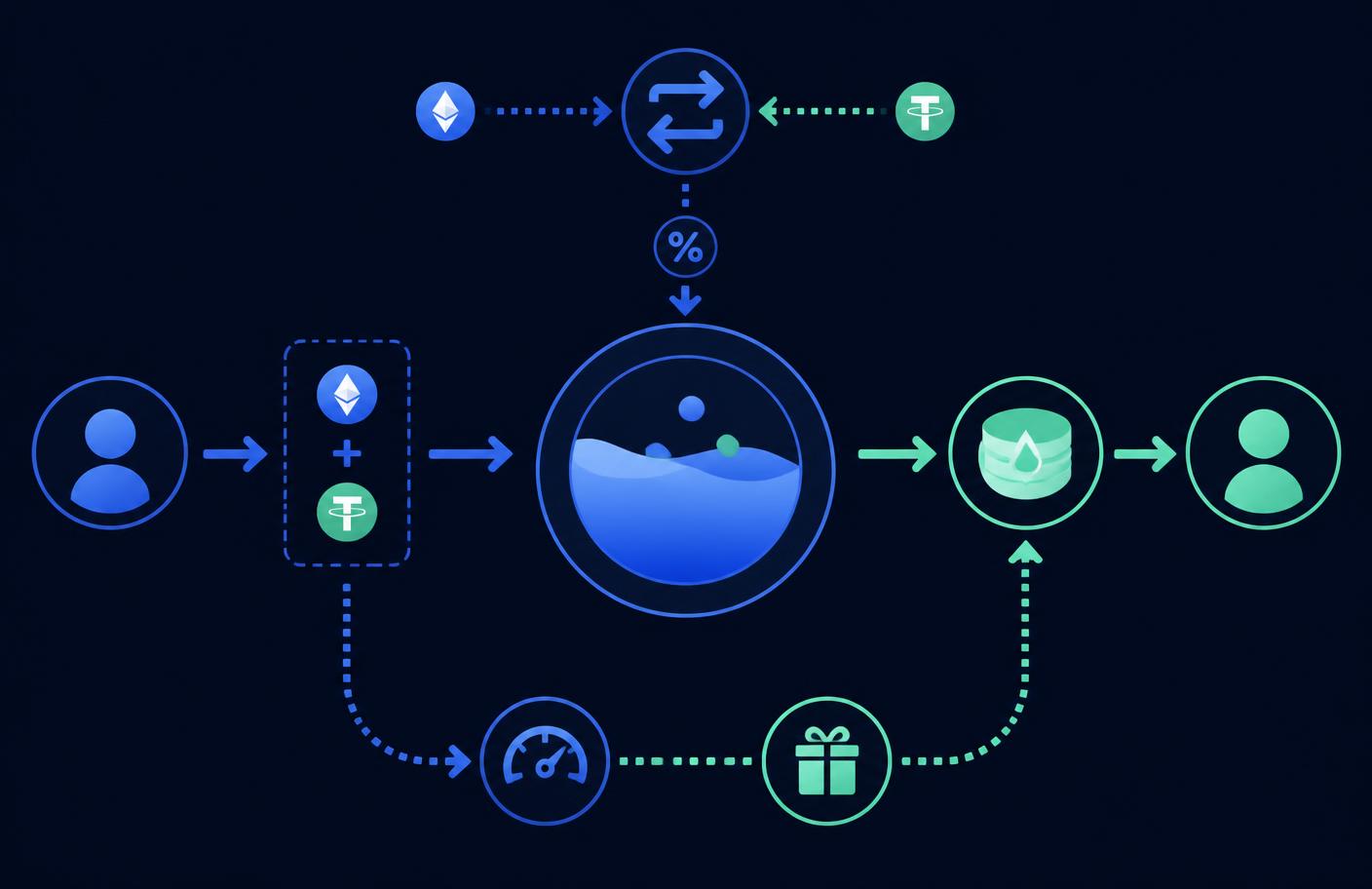
Curve Finance liquidity providers earn a share of swap fees and can stake LP tokens in gauges for CRV emissions. Locking CRV as veCRV boosts those Curve Finance rewards.
Curve Finance carries smart-contract risk, depeg risk on the underlying assets, governance risk and, for volatile pools, impermanent loss. Nothing on this site is financial advice.