Curve Finance article
Curve Finance across chains: where to actually trade
Curve Finance is deployed on Ethereum and a long list of layer twos and alternative networks. Each deployment has its own depth, its own gas economics and its own bridge assumptions.
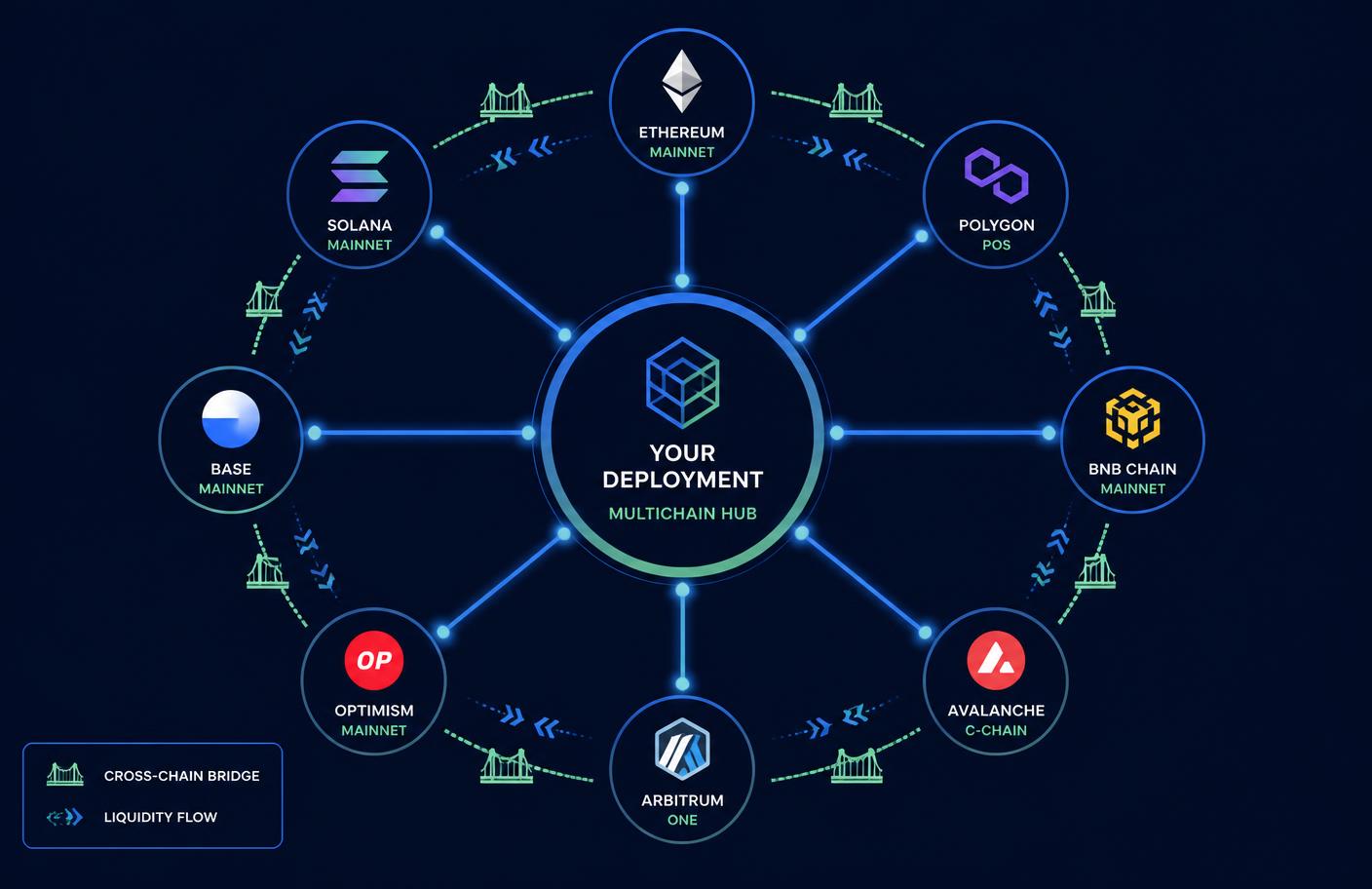
Curve Finance began on Ethereum and stayed there as its centre of gravity, but the protocol now runs on many networks. For users this is mostly good news: the same Curve Finance mechanics with dramatically lower transaction costs. It also introduces a decision that did not exist in the single-chain era — which Curve Finance deployment should you use, and what are you implicitly trusting when you do?
Why Curve Finance expanded
Stablecoin swapping is a high-frequency, low-margin activity. When a single Ethereum transaction costs more than the slippage saved, the Curve Finance advantage disappears for ordinary trade sizes. Deploying Curve Finance to cheaper execution environments restored that advantage for everyday users and made small liquidity positions viable again, since a provider can deposit, stake and claim without spending months of yield on gas.
The fragmentation trade-off
Deep liquidity is the entire product of Curve Finance, and deploying to many chains splits it. A Curve Finance pool on a smaller network may hold a small fraction of what its mainnet counterpart holds, which means the flat, low-slippage region of the curve covers a smaller absolute trade size. The practical rule is straightforward: match the trade size to the venue. Institutional-scale stable rotation still belongs on the deepest Curve Finance deployment; routine amounts belong wherever gas is cheapest.
Bridged assets are not the same asset
This is the most underrated risk in cross-chain Curve Finance usage. A dollar token on a layer two may be natively issued or it may be a bridged representation. Those are different instruments with different failure modes. If the bridge securing a wrapped asset is compromised, that asset can go to zero on its chain while the original is unaffected — and any Curve Finance pool containing it will fill up with the worthless side. When you assess a cross-chain Curve Finance pool, assess the bridge as one of the assets.
Emissions and gauges beyond mainnet
Curve Finance gauge voting happens on Ethereum, but emissions can be routed to pools on other networks through cross-chain gauge infrastructure. That keeps the incentive system unified: a project can compete for Curve Finance emissions for its layer-two pool using the same veCRV market. It also means claiming and boosting can involve more steps than on mainnet, and the details differ per deployment.
Choosing a chain for your Curve Finance activity
- Trade size. Large swaps want the deepest Curve Finance pool, full stop.
- Holding period. Short-term positions cannot absorb mainnet gas; long-term ones can amortise it.
- Asset provenance. Prefer Curve Finance pools built on natively issued tokens over bridged wrappers where possible.
- Exit path. Know how you will get value back to your home chain before you commit it, not after.
The bigger picture
Multichain deployment turned Curve Finance from an Ethereum application into a piece of shared infrastructure that any network can host. For a chain launching today, standing up a Curve Finance stable pool is one of the fastest ways to give its ecosystem credible dollar liquidity. That portability, more than any single feature, is why Curve Finance keeps appearing at the base of new DeFi stacks rather than being displaced by them.